Long title for a dummy conference
Overview
In today’s fast-evolving pharmaceutical industry, the shift from traditional batch processes to continuous flow synthesis has become a game-changer. Continuous flow technology offers numerous advantages, including increased efficiency, enhanced safety, reduced production costs, and improved product quality. As the demand for faster, more reliable, and scalable production processes grows, scientists and process engineers in the pharmaceutical industry are seeking ways to leverage the full potential of flow chemistry. To address this need, we at Glostem, are proud to present the masterclass “Scaling-up Flow Synthesis – Developing Powerful Continuous Processes for Pharmaceuticals.”
This masterclass is specifically designed for scientists, process developers, and R&D professionals working in the pharmaceutical, agrochemicals, fine-chemicals and petroleum industries who are eager to deepen their knowledge of flow chemistry and learn how to successfully scale up lab-scale reactions into industrial-scale continuous processes. The masterclass will provide participants with essential theoretical knowledge, practical tools, and insights into overcoming common challenges faced when scaling-up flow synthesis.
- A major focus of the masterclass will be on the critical aspect of scaling up flow synthesis from the lab to industrial production.
- Scaling up is not simply a matter of increasing the size of the reactor;
- it requires careful consideration of factors such as heat and mass transfer, mixing efficiency, and reactor design.
- Participants will learn about the challenges encountered during the scale-up process and how to optimize reaction conditions to ensure a smooth transition from small-scale to production-scale processes.
- Techniques for designing reactors that maintain consistent performance at larger scales will also be discussed.
Additionally, the masterclass will delve into developing robust continuous processes that are reliable, efficient, and scalable. Participants will explore strategies for optimizing reaction conditions, managing solvents and reagents, controlling impurities, and recycling catalysts, all while ensuring that the processes meet stringent pharmaceutical manufacturing standards. Attention will be given to the integration of process analytical technologies (PAT) and quality control measures to ensure that continuous flow processes meet the regulatory requirements of global agencies such as the FDA and EMA.
This two-day workshop on flow chemistry will provide three content sessions per day (90 min each) as well as a concluding Q&A session. On day 1, the fundamentals behind flow chemistry will be briefly highlighted to ensure participants have the same knowledge base on important concepts such as heat & mass transfer, mixing and residence time. Next, a selection of high and low-temperature applications will be discussed which shows how these concepts can be exploited in miniaturized flow reactor set-ups. This will entail information on the type of flow reactor, the materials used, and the configuration to best meet a given need. Important aspects such as reaction scale-up, process intensification, safety, and reaction streamlining will be highlighted and discussed on the chosen case studies. The last session on day 1 will discuss several hazardous chemistry applications whereby flow reactors provide for increased safety due to miniaturization, in situ generation and quench of reactive intermediates, and the use of inline PAT to inform the flow process optimization.
On day 2 the focus will shift towards using heterogeneous conditions in flow applications such as the use (or generation) of solids and gases as well as various related biphasic scenarios. This will then lead to discussions on multi-step reactions performed in flow mode via telescoping and integrated inline purification strategies. The scalability to generate kilogram quantities of products will be an integral component of this session. Lastly, a number of recent flow applications for the scaled generation of APIs will be highlighted. This will focus on the underlying chemistry and the development of a powerful continuous process as well as on regulatory aspects and development time implications.
Overall, this masterclass offers a comprehensive training opportunity for pharmaceutical scientists and engineers who are looking to harness the power of flow chemistry to scale-up processes effectively. By the end of the session, participants will have the knowledge and tools needed to develop continuous processes that are efficient, scalable, and compliant with regulatory standards. This masterclass will be an invaluable resource for those looking to drive innovation and streamline production in pharmaceutical manufacturing.
Contacts
Technical Query: Ms. Tavleen Thakur, M: 7696125050, Email: t.thakur@glostem.com
Participation Query: Ms. Swati Kanwar, M: 8289015050, Email: s.kanwar@glostem.com
Ms. Farheen, M: 7696225050, Email: f.zainab@glostem.com
Conference Date
23-10-2025
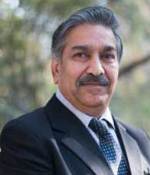
Prof K C Bansal's Biography
Prof K C Bansal
Secretary
National Academy of Agricultural Sciences, New Delhi
Professor KC Bansal is a former Director of the National Bureau of Plant Genetic Resources, Indian Council of Agricultural Research (ICAR), New Delhi. He also spearheaded the National Transgenic Crop Network across various ICAR research institutions.
His research interests include functional genomics and transgenic development for abiotic stress tolerance in plants; developed the first series of transgenic crops with improved tolerance to drought and salt stress. His work on functional characterization of LEA, MYB, sHSP and osmotin gene is well known. The first ABA receptor gene OsPYL10 from an Indian drought tolerant rice landrace was cloned by his lab.
He took an unprecedented initiative to evaluate the entire wheat germplasm (~ 22000 accessions) conserved at the Indian National Genebank, and identified trait-specific reference sets.
Prof. Bansal served as Vice-Chair (Asia), Commission on Genetic Resources for Food and Agriculture, FAO, United Nations (2013-15). He is recipient of the Indian Science Congress award conferred on him by the Prime Minister of India, and the Haryana Vigyan Ratna (Highest State Science award).
Prof. Bansal is elected Fellow of the National Academy of Agricultural Sciences, and the National Academy of Science, India. He serves on the Editorial Board of the Plant Biotechnology Journal.
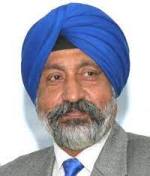
Sanjay Bajaj's Biography
Sanjay Bajaj
CEO & MD
Glostem Private Limited
Dr. Sanjay Bajaj is the Founder and CEO of Glostem Private Limited. He also serves as Director for two other organizations. He is a graduate in Pharmacy from DIPSAR, Delhi University, Postgraduate in Pharmaceutics from UIPS, Panjab University, Chandigarh and PhD from USCT, GGS Indraprastha University, Delhi. He is also an MBA from IGNOU, Delhi. He is a recipient of IPA Silver Medal for being Delhi University Topper in the year 1989.
After completing his M. Pharmacy from UIPS in 1995, he has worked in pharmaceutical companies Panacea Biotech and Win Medicare in Product Management. Later, he joined teaching and research at DMC, Ludhiana and served as Professor and Principal in Swami Vivekanand College of Pharmacy, Banur, India for 6 years. During his PhD, he developed several novel mathematical tools for their potential application in drug discovery, some of which have been included in the commercially available software. He developed a Pharmacy institution from scratch to Post-graduation level. He has guided ten M. Pharm thesis as a part of his academic research career. He has 23 publications in referred journals, 2 book chapters and several invited lectures and presentations at national and international level. He has also edited a book entitled “Methods for Stability Testing of Pharmaceuticals” which was published by Springer in May 2018.
In his current profile, he has organized over 125 conferences and training courses for the benefit of thousands of scientists working in pharmaceutical, biotechnology, diagnostics and molecular pathology institutions and industry. He also head various divisions at Glostem catering to Pharma regulatory services, Pharma industry solutions, Instrument consultancy and Lead marketing services.
He is a Life member of IPA, APTI, IPGA, ICA, and IHPA.
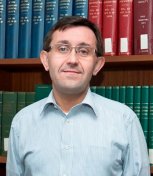
Paul Watts's Biography
Paul Watts
Research Chair in Microfluidic Bio/Chemical Processing
Nelson Mandela University
Prof Paul Watts started his career as a lecturer at the University of Hull in 2002, being promoted to full professor in 2011. At the University of Hull he led the micro reactor and flow technology group. In February 2013, he moved to Nelson Mandela University to hold the distinguished position of ‘Research Chair in Microfluidic Bio/Chemical Processing’. He has published of over 120 highly cited papers. He strongly believes that scientists should conduct research that impacts society; the biggest project underway involves the local production of key drugs as the morbidity and mortality from major diseases are much more devastating in Africa than in other regions of the world. The vision is that new technology will be used within South Africa to manufacture generic drugs; this could create jobs and a new manufacturing industry within the country.
Conference Agenda
- Challenges in Pharmaceutical Analysis
- Control of Nitrosamine & NDSRI Impurities
- Analytical Detection of Nitrosamine & NDSRI Impurities
- Analytical Considerations for Extractables & Leachable
Agenda Topics for Dummy conference
- Challenges in Pharmaceutical Analysis
-
Control of Nitrosamine & NDSRI Impurities
- subtopic
- Control of Nitrosamine & NDSRI Impurities
- Analytical Detection of Nitrosamine & NDSRI Impurities
-
Analytical Considerations for Extractables & Leachable
- subtopic
Who should attend
- Title here
- Analytical Considerations for Extractables & Leachable
Who should attend
- Title here
-
Analytical Considerations for Extractables & Leachable
This is description
Conference Officials
Please contact 9811082834
Chief Guest
Prof K C Bansal's Biography
Prof K C Bansal
Secretary
National Academy of Agricultural Sciences, New Delhi
Professor KC Bansal is a former Director of the National Bureau of Plant Genetic Resources, Indian Council of Agricultural Research (ICAR), New Delhi. He also spearheaded the National Transgenic Crop Network across various ICAR research institutions.
His research interests include functional genomics and transgenic development for abiotic stress tolerance in plants; developed the first series of transgenic crops with improved tolerance to drought and salt stress. His work on functional characterization of LEA, MYB, sHSP and osmotin gene is well known. The first ABA receptor gene OsPYL10 from an Indian drought tolerant rice landrace was cloned by his lab.
He took an unprecedented initiative to evaluate the entire wheat germplasm (~ 22000 accessions) conserved at the Indian National Genebank, and identified trait-specific reference sets.
Prof. Bansal served as Vice-Chair (Asia), Commission on Genetic Resources for Food and Agriculture, FAO, United Nations (2013-15). He is recipient of the Indian Science Congress award conferred on him by the Prime Minister of India, and the Haryana Vigyan Ratna (Highest State Science award).
Prof. Bansal is elected Fellow of the National Academy of Agricultural Sciences, and the National Academy of Science, India. He serves on the Editorial Board of the Plant Biotechnology Journal.
Secretary,
National Academy of Agricultural Sciences, New Delhi,
India
Conference Chair
Sanjay Bajaj's Biography
Sanjay Bajaj
CEO & MD
Glostem Private Limited
Dr. Sanjay Bajaj is the Founder and CEO of Glostem Private Limited. He also serves as Director for two other organizations. He is a graduate in Pharmacy from DIPSAR, Delhi University, Postgraduate in Pharmaceutics from UIPS, Panjab University, Chandigarh and PhD from USCT, GGS Indraprastha University, Delhi. He is also an MBA from IGNOU, Delhi. He is a recipient of IPA Silver Medal for being Delhi University Topper in the year 1989.
After completing his M. Pharmacy from UIPS in 1995, he has worked in pharmaceutical companies Panacea Biotech and Win Medicare in Product Management. Later, he joined teaching and research at DMC, Ludhiana and served as Professor and Principal in Swami Vivekanand College of Pharmacy, Banur, India for 6 years. During his PhD, he developed several novel mathematical tools for their potential application in drug discovery, some of which have been included in the commercially available software. He developed a Pharmacy institution from scratch to Post-graduation level. He has guided ten M. Pharm thesis as a part of his academic research career. He has 23 publications in referred journals, 2 book chapters and several invited lectures and presentations at national and international level. He has also edited a book entitled “Methods for Stability Testing of Pharmaceuticals” which was published by Springer in May 2018.
In his current profile, he has organized over 125 conferences and training courses for the benefit of thousands of scientists working in pharmaceutical, biotechnology, diagnostics and molecular pathology institutions and industry. He also head various divisions at Glostem catering to Pharma regulatory services, Pharma industry solutions, Instrument consultancy and Lead marketing services.
He is a Life member of IPA, APTI, IPGA, ICA, and IHPA.
CEO & MD,
Glostem Private Limited,
India
Speakers & Panelists
Paul Watts's Biography
Paul Watts
Research Chair in Microfluidic Bio/Chemical Processing
Nelson Mandela University
Prof Paul Watts started his career as a lecturer at the University of Hull in 2002, being promoted to full professor in 2011. At the University of Hull he led the micro reactor and flow technology group. In February 2013, he moved to Nelson Mandela University to hold the distinguished position of ‘Research Chair in Microfluidic Bio/Chemical Processing’. He has published of over 120 highly cited papers. He strongly believes that scientists should conduct research that impacts society; the biggest project underway involves the local production of key drugs as the morbidity and mortality from major diseases are much more devastating in Africa than in other regions of the world. The vision is that new technology will be used within South Africa to manufacture generic drugs; this could create jobs and a new manufacturing industry within the country.
Research Chair in Microfluidic Bio/Chemical Processing,
Nelson Mandela University,
South Africa
Venue
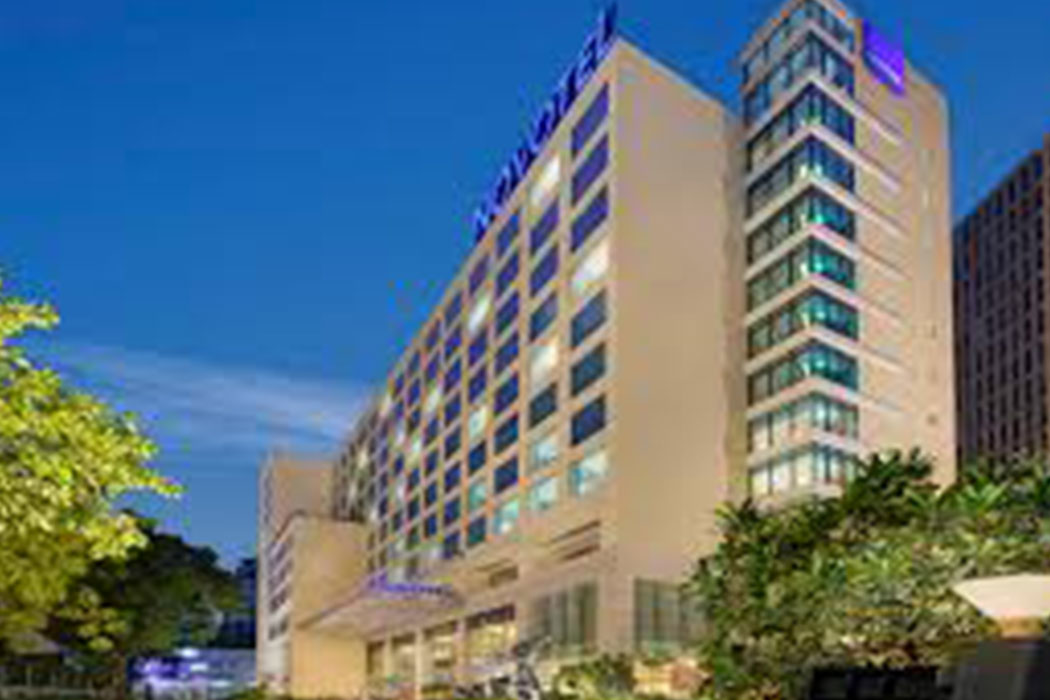
Novotel Hotel, Ahmedabad
Address: Iscon Cross Roads, Sarkhej - Gandhinagar Hwy, next to Wide Angle Cinema, Ahmedabad, Gujarat 380015
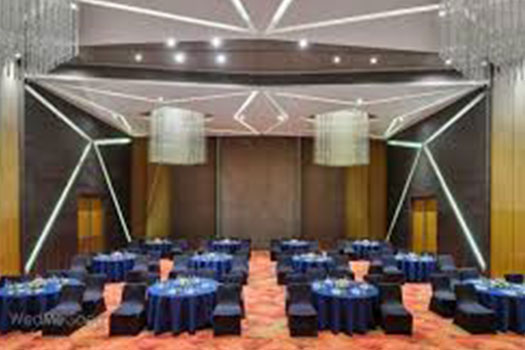
Novotel Ahmedabad offers a perfect blend of comfort, elegance, and convenience. Ideally located on S.G. Highway, it provides easy access to the city’s business hubs, shopping destinations, and cultural landmarks. The hotel features modern, spacious rooms, exceptional dining options, and thoughtful amenities, ensuring a relaxing and memorable stay. With its welcoming ambiance and warm hospitality, Novotel Ahmedabad is an ideal choice for both business and leisure travelers.
Explore some of India's most celebrated attractions including ISKCON temples, the Gandhi Ashram and Swaminarayan Akshardham complex. Punctuate an unforgettable day with a refreshing dip in our sparkling outdoor pool, or indulge in a massage or treatment at our hotel.
This is for a dummy exhibition
Conference Sponsors
Gold Sponsor
ADS Processus
Bronze Sponsor
Zaiput Flow Technologies
Green Chemistry Foundation
ADS Processus
ADS Processus
Zaiput Flow Technologies
Green Chemistry Foundation
Dummy conference
Thursday, 23rd October 2025
| 09:00 |
Inaugration
|
| 10:50 |
Morning Session
|
| 10:50 |
Talk No.1 View Abstract Paul Watts, Research Chair in Microfluidic Bio/Chemical Processing, Nelson Mandela University, South Africa Abstract summary Brief desc
|
| 11:35 |
Talk no.2 View Abstract Sanjay Bajaj, CEO & MD, Glostem Private Limited, India Abstract summary will be displayed here Conferences, Trainings, Workshops & Meetings for Pharma, Science & Technology Industry & Academia |
| 13:00 |
Lunch
|
Who should attend
- Title here
-
Analytical Considerations for Extractables & Leachable
-
This is description
-
Registration
- Manual: Cheque / NEFT / RTGS (confirmation number required)
- Razorpay: UPI, NetBanking, Credit/Debit Cards (INR)
- ICICI Payment Gateway (as enabled)
- Access to all conference sessions
- Conference kit & materials
- Tea/Coffee & Lunch (as per program)
- Certificate of participation